A plan you can actually keep.
The guide asks eight questions, and each one opens with the answer already filled in from your own books — what you billed, what you spent on fuel or rent, what you took out. You change what you want to change, and the sheet tells you what happens if the plan holds.
The guide
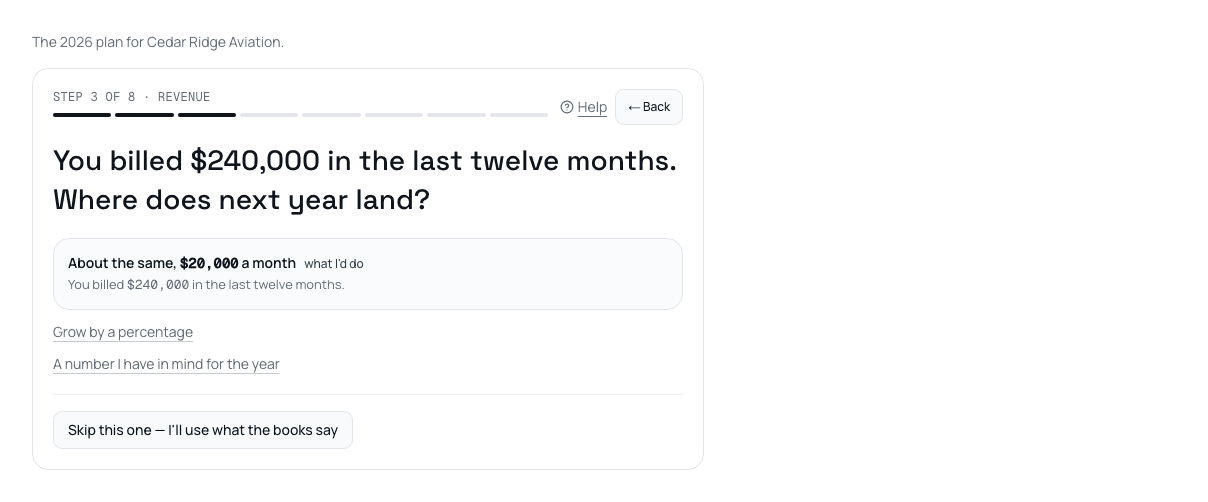
Start from the last twelve months, say what the plan is for, then revenue, costs, people, and owner pay — one decision per screen, typing over the proposal as the escape hatch.
Eight screens, one decision each: where to start from, what the plan is for, where revenue lands, the costs you've committed to, the costs that move, people and any hire, what you take out, and the consequence. Skip a screen and it keeps what was proposed; leave and come back to where you stopped.
The sheet
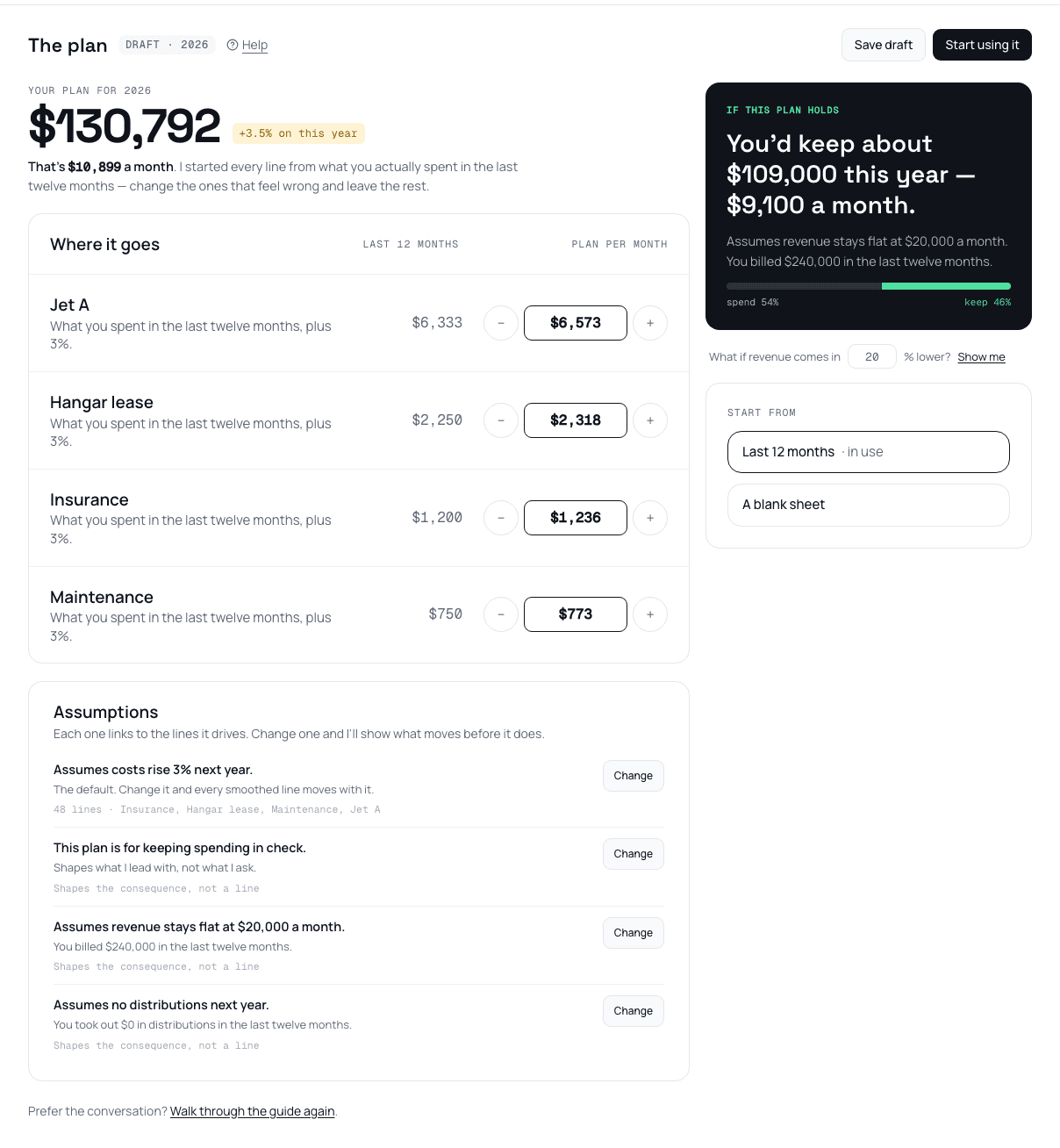
Every line names where it started and what it assumes. Change one assumption and every line it drives moves with it.
The consequence card sits beside the lines, not below them: it says what you'd keep if the plan holds, and updates the moment you change a line or an assumption. A toggle asks what a lower revenue month would do to that number, without touching the plan itself.
Living with it

Each line names how many days in you are, where you'd normally be by today, and which charge moved it. Raise this line or move a line to a new figure makes a reforecast version — the original is kept.
Once a plan is live, the page opens on the month in progress, line by line, with a sentence built from the charges that moved each one. The weekly summary carries the same pace, and Today surfaces a line worth a decision.
Month end
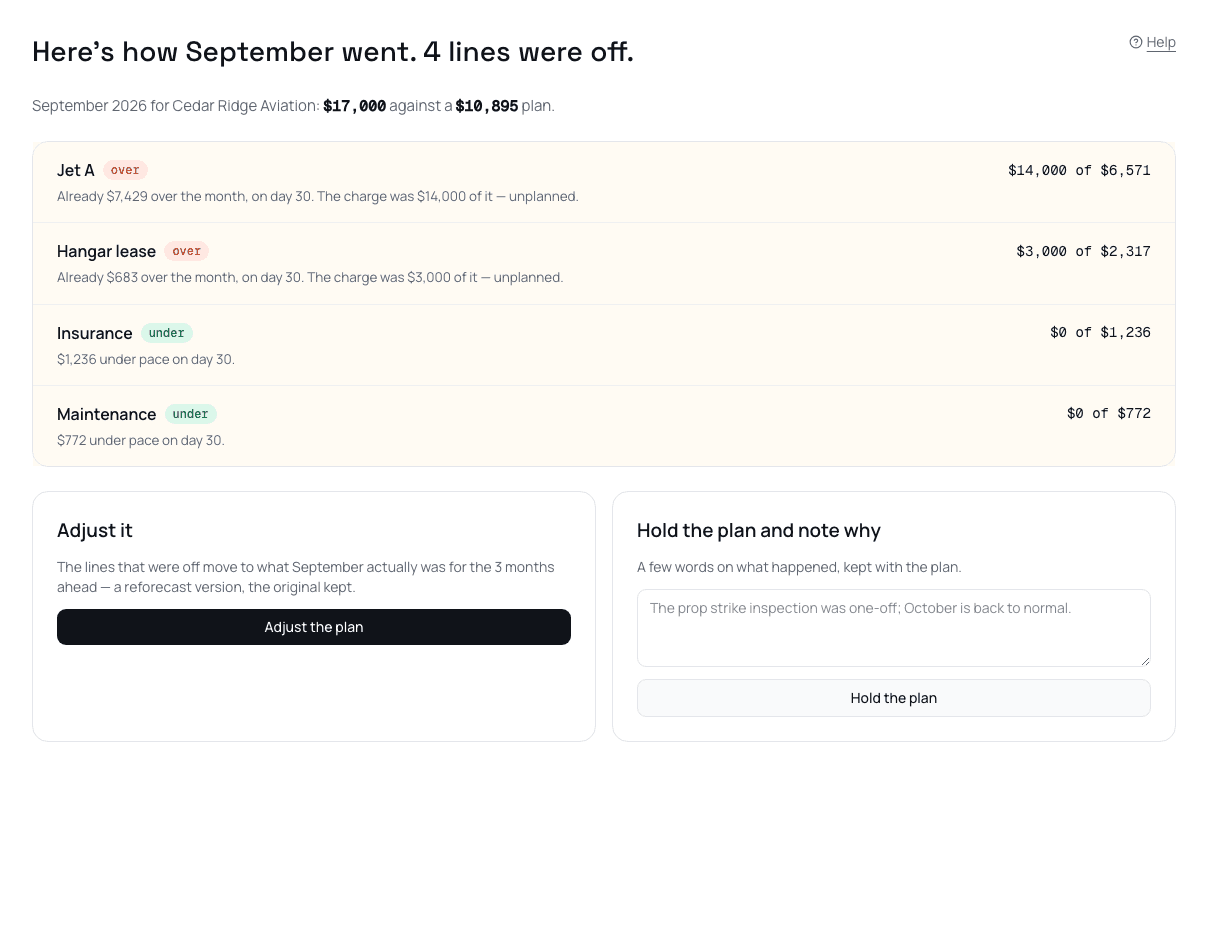
On the first of the month, the review lays out what moved and asks a decision: hold the plan and note why, or adjust it. Either way the version you started with is kept, and Reports carries plan versus actual.
The rules, which are the point
Plan next year in an afternoon.
Thirty days free. Proposed from your own books, changed where you say.